
From Small Shops to Big Dreams: How Management Education Can Transform Nepal’s Small Businesses
Small businesses are the backbone of Nepal’s economy. Management education can be the foundation of their growth.
Across Nepal, thousands of people earn their livelihoods through small businesses. From local grocery shops and vegetable vendors to grain traders, tea stalls, tailoring businesses, family-run enterprises, and neighborhood service providers, these businesses represent the entrepreneurial spirit of ordinary Nepalis.
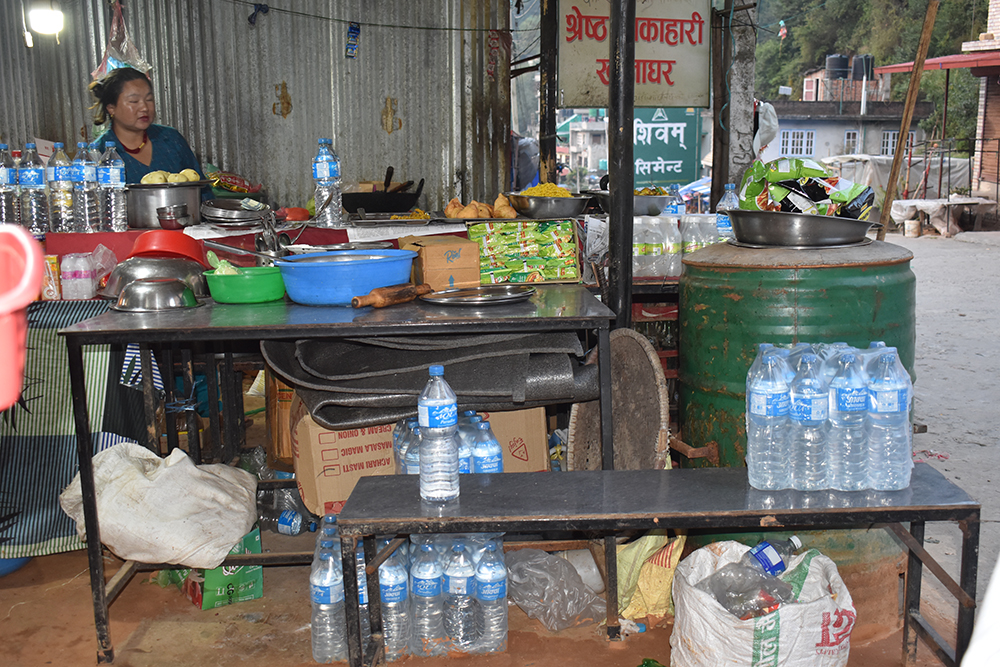
The photograph captures one such example: a small-scale trader selling different varieties of grains, pulses, and seeds. Behind these modest business activities are countless decisions involving purchasing, pricing, inventory management, customer relationships, cash flow, and daily operations.
For many entrepreneurs, these decisions are made through experience, observation, and intuition rather than formal management knowledge. Their hard work and practical wisdom keep their businesses running. However, the question is: How much more could these businesses achieve if practical experience were supported by professional management knowledge?
Small Businesses Need More Than Hard Work
Running a small business is not simply about buying products and selling them at a profit. It requires several essential management competencies.
Consider the small grain trader in the photograph. Even a relatively simple business involves:
-
Financial Management: Calculating actual costs, determining profit margins, maintaining accounts, and managing cash flow.
-
Marketing Management: Understanding customer preferences, developing competitive prices and attracting new customers.
-
Operations Management: Managing inventory, ensuring product quality, reducing wastage, and maintaining an efficient supply chain.
-
Human Resource Management: Organising work, developing skills and products, and maintaining productive relationships.
-
Entrepreneurship: Identifying new opportunities, introducing innovative products and expanding business activities.
-
Digital Business: Using digital payments, social media, and online platforms to reach more customers.
These are not merely textbook concepts. They are practical management requirements that determine whether a small business survives, grows, or eventually disappears.
Connecting Management Education with Real Businesses
This is where management education becomes particularly relevant.
At Academia International College, we believe that management education should not remain confined to textbooks, lecture rooms, and examinations. It should prepare students to understand, analyse and solve real-world business problems.
Our management programs, including BBM, BBS and MBS, provide students with opportunities to develop the knowledge and competencies required to manage businesses in an increasingly competitive environment.
Imagine a BBM student analysing the business in the photograph. The student could undertake a small business study to understand its purchasing practices, pricing strategies, customer segments, inventory management, and profitability. Another student could develop a simple digital marketing plan, while an MBS student could explore opportunities for business expansion and strategic development.
Similarly, BBS students could apply their accounting and financial management knowledge to help such businesses maintain systematic financial records, understand their costs, and make informed decisions.
Through case studies, field visits, project work, presentations, internships, and practical assignments, management students can connect classroom learning with the realities of Nepal's business environment.
Turning Local Businesses into Learning Laboratories
Nepal's small businesses offer an enormous opportunity for experiential learning.
Instead of studying only the success stories of multinational corporations, students should also explore the challenges and opportunities faced by local entrepreneurs.
Academia can encourage students to:
-
Conduct field-based studies of small and family-owned businesses.
-
Prepare basic business plans for local entrepreneurs.
-
Analyse business costs, revenues, and profitability.
-
Recommend practical marketing and promotional strategies.
-
Explore digital payment systems and online business opportunities.
-
Identify possibilities for product diversification and business expansion.
-
Develop solutions to everyday operational and managerial challenges.
Such activities can create a meaningful relationship between academic institutions and the local business community.
More importantly, students will learn that management is not just a subject to pass in university examinations. It is a practical discipline that can improve people's livelihoods.
Building Entrepreneurs, Not Just Graduates
Nepal needs graduates who can do more than seek employment. It needs graduates who can recognise opportunities, establish enterprises, manage resources, create employment, and contribute to economic development.
A person running a small shop today could become the owner of a successful trading company tomorrow. A family-owned enterprise could develop into a recognised brand. A traditional business could adopt modern technology and reach customers beyond its immediate locality.
Such transformation requires entrepreneurial vision, financial discipline, innovation, and professional management.
Management education can play a significant role in making this transformation possible.
Academia's Commitment to Practical Management Education
At Academia International College, our philosophy is to foster the competencies students need to succeed in the real business world. We emphasise critical thinking, communication, collaboration, and creativity alongside academic knowledge.
We envision management classrooms where students discuss actual business challenges, interact with entrepreneurs, analyse local enterprises, and develop implementable solutions.
We should not overlook the small businesses we see in our neighborhoods. They are potential learning laboratories, sources of entrepreneurial inspiration, and important contributors to Nepal's economy.
Our belief is simple: Management education should not only prepare students to work in businesses; it should empower them to understand, improve, lead, and create businesses.
The next successful Nepali entrepreneur may be sitting in an Academia classroom today.
Academia International College
Inspiring Innovation | Creating Leaders